
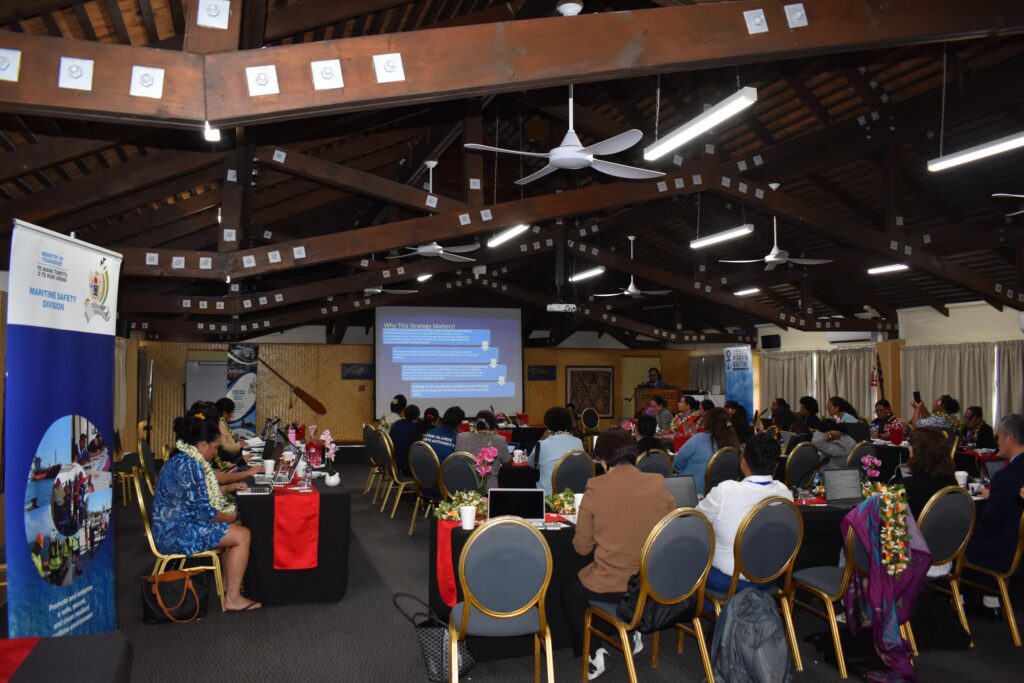
The Pacific maritime sector is navigating a transformative era, as evidenced by the recent Regional Workshop on Gender Responsive Governance and the Twin Transition held in Rarotonga. This gathering brought together representatives from 12 Pacific island nations to address the critical “maritime gender gap” and ensure that women are positioned as leaders in the industry’s shift toward decarbonization and digitalization. Hosted in the Cook Islands, the biennial meeting of the Pacific Women in Maritime Association (PacWIMA) served as a strategic platform to align national efforts with international standards set by the International Maritime Organization (IMO).
The Cook Islands maritime industry was well-represented at the event, notably by Marketing Manager Katrina Matheson of Maritime Cook Islands (MCI). Her participation highlighted the registry’s proactive stance on professional development and its commitment to fostering an inclusive environment where women can thrive in technical and decision-making roles. By engaging in these high-level regional dialogues, local leaders like Matheson are ensuring that the Cook Islands remains a key player in the global shipping community while simultaneously advocating for a more diverse and resilient workforce at home.
Central to the workshop’s agenda was the concept of the “Twin Transition”—the dual challenge of adopting green technologies and integrating automated digital systems. For shipowners and operators, these initiatives are vital as they facilitate a more skilled and modernized workforce, ensuring the region is equipped with the leadership and technical expertise required to navigate the complex regulatory demands of decarbonization. Delegates argued that achieving these goals requires tapping into the full talent pool of the region, which is currently hindered by a lack of formal gender equality policies in many Pacific maritime administrations. To combat this, the workshop finalized a five-year regional strategy for PacWIMA and developed the Pacific Gender Responsive Maritime Governance Guidance. These tools are designed to provide a roadmap for island nations to implement inclusive policies that move beyond mere representation toward meaningful empowerment.
The event also emphasized the importance of inspiring the next generation through initiatives like the “Adopt A Ship” program, which seeks to introduce maritime career paths to Pacific youth. Supported by the IMO, the SPC, and international partners including Australia, China, and the Republic of Korea, the workshop concluded with a clear mandate for the future. As the outcomes are prepared for presentation to the Pacific Heads of Transport later this year, the collaboration between regional bodies and local professionals ensures that the Pacific maritime industry is charting a course toward a more equitable and sustainable horizon.